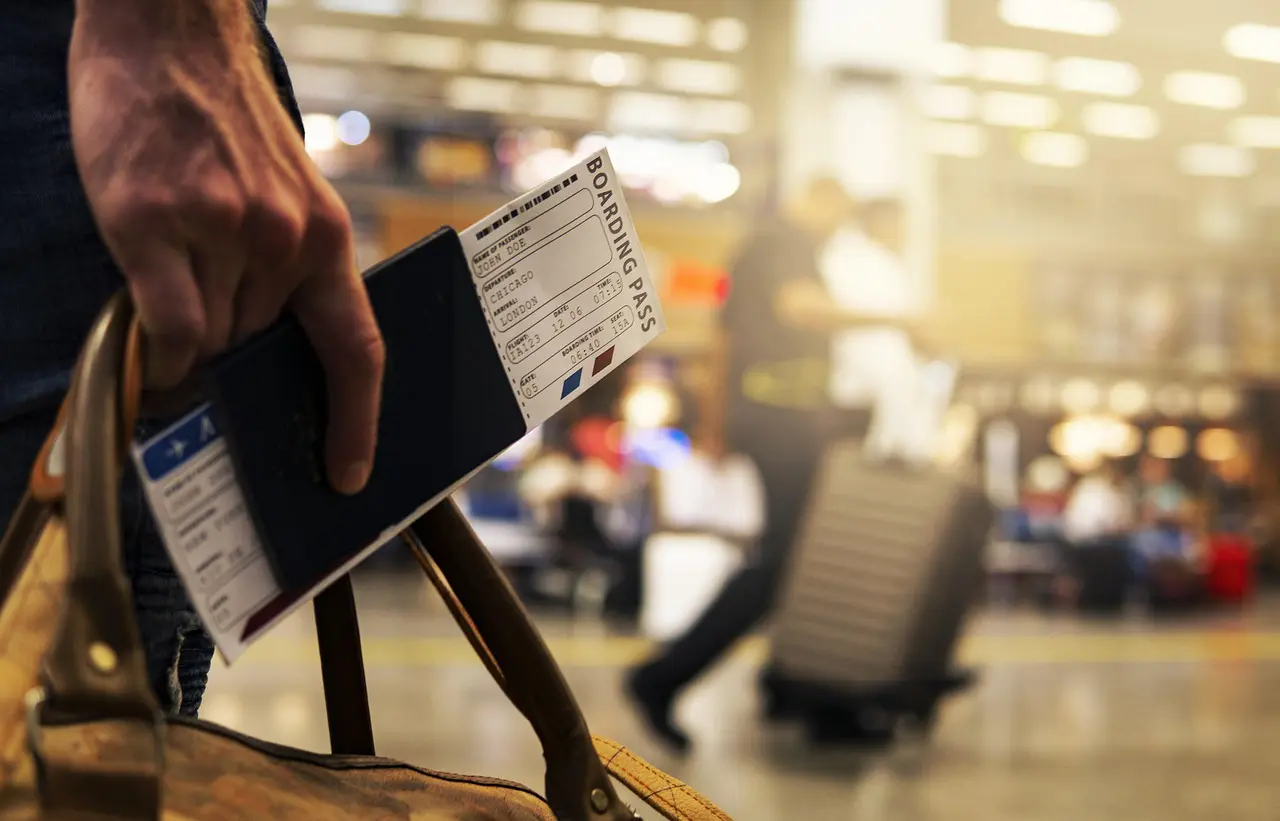
At 05:40 a.m., Sofía opens her airline’s app from home. She is not looking for the “check-in” — she did that the night before — but for something simpler: confirmation that she will be able to fly today without surprises. She points the camera at her passport, brings her phone closer to read the chip (NFC), and takes a selfie. In less than a minute, her identity is verified and ready to “travel” as data: prepared to be validated at critical airport checkpoints without showing physical documents again, and with her consent fully under control.
This is the promise of document-free boarding: a chain of trust built on biometric identity, digital credentials, and regulatory compliance (PNR, ICAO, GDPR) from the very first step.
That “paperless journey” is not a slogan. In 2026, it is a direct response to two simultaneous pressures: increasingly demanding regulation and passengers who penalize friction. And if poorly implemented, it can also become a reputational and legal risk — especially when biometrics are involved.
Why “Paperless” in 2026 Is Primarily About Compliance (and Money)
Every airline knows the “INAD moment”: a passenger who arrives at destination and is declared inadmissible due to documentation issues, eligibility problems, or risk assessment failures. The consequence is not only operational. It implies custody costs, accommodation, escorts, forced returns, service disruptions, and in some markets, fines per passenger.
At the same time, Europe is accelerating digital border controls. The implementation of ETIAS and the progressive rollout of the Entry/Exit System (EES) add operational pressure in airports, especially during peak demand.
The result is clear: passenger eligibility is no longer resolved at the counter. It must be managed before the traveler reaches the airport.
The Structural Shift: From Isolated Steps to a Reusable Identity
The traditional journey is fragmented:
Reservation → check-in → security → border control → boarding → ancillary services.
Each stage repeats verifications, creates queues, and introduces blind spots.
The Seamless Travel model proposes the opposite: a contactless, interoperable experience without repetitive checks, using digital credentials and biometric authentication at key points such as:
- Bag drop
- Security
- Immigration
- Lounge access
- Boarding
Instead of presenting a passport five times, the passenger reuses a previously verified digital identity.
This model relies on standards and frameworks already active in the industry:
- ICAO Digital Travel Credential (DTC) as the technical basis for representing the passport in digital format, especially DTC Type 1 as a first step toward verifiable credentials.
- IATA One ID, defining how digital identity and biometrics can be used at the airport while ensuring consent and data minimization.
- IATA Contactless Travel Directory, enabling interoperability among airlines, airports, and biometric providers.
The context supports this transition: IATA studies show that passenger use of biometrics continues to grow year after year, but acceptance depends directly on how privacy and data control are managed.
The Full Story: Sofía’s Journey (and Where PNR, ICAO, and GDPR Fit)
1. “Ready to Travel” Begins at Home
Sofía completes remote enrollment: passport capture and chip reading, selfie verification, and, where applicable, issuance of a digital credential.
The logic is simple: if identity is correctly digitized before travel, the airport ceases to be the critical validation point.
Two dimensions converge here:
- Regulatory-operational: verifying entry requirements, document consistency, and eligibility.
- Technical: creating a verifiable representation (DTC or digital credential) that can later be presented under user control.
To validate entry requirements, the industry standard is TIMATIC, which provides up-to-date information on visas, documentation, and health requirements, reducing admission errors.
2. Frictionless Check-in: Consent and Data Minimization
Digital check-in is not about “uploading a passport to the cloud.” It is about presenting only the necessary attributes and recording consent in an auditable way.
The modern approach combines identity + consent + eligibility as a verifiable package, rather than forcing passengers to repeatedly accept conditions without traceability.
3. Airport Authentication: 1:1 or 1:N Depending on Jurisdiction
At eGates, the passenger authenticates via biometrics and presents her digital credential when required.
Depending on the country’s regulatory framework, the model may be:
- 1:1 (verification): direct comparison between the passenger’s biometric data and their presented credential.
- 1:N (identification): matching against an authorized biometric database.
In both cases, authentication combines possession (credential) and inherence (biometrics), effectively equivalent to strong authentication.
For CIOs and Digital Identity leaders, the challenge lies in designing a system adaptable to different regulatory frameworks and evolving schemes (EES, ETIAS, national wallets, etc.).
4. The Last Mile: Lounge Access as a Tangible Example
One of the clearest examples of identity and experience converging is lounge access.
Traditional model: QR code, card, physical document, and manual validation.
Seamless model: biometric authentication at the entrance, automatic eligibility verification (status or purchase), and instant payment resolution if needed.
In a single interaction, the system resolves identity + consent + eligibility + payment.
Biometrics and GDPR: Where Projects Succeed or Fail
A common mistake in 2026 is assuming biometrics automatically mean greater speed.
The difference between a sustainable project and a blocked one lies in data architecture.
The European Data Protection Board (EDPB) has analyzed multiple biometric use cases in airports — from passenger-controlled template storage to centralized databases managed by operators.
The conclusion is clear: intrusiveness can be mitigated if the passenger retains control and if strict principles of minimization and limited retention are applied.
This is not theoretical. In some European countries, deployments have been halted due to insufficient data protection safeguards.
For this reason, document-free boarding in Europe requires genuine privacy-by-design: demonstrable consent, effective minimization, and limited retention.
Fraud and Payments: The Other Side of the Digital Journey
Digitalization also impacts payments and fraud.
The growth of digital wallets in travel is evident, but it expands the attack surface in areas such as:
- Identity impersonation
- Booking fraud
- Card-not-present fraud
Industry strategies often differ by priority:
- Carriers: focus on eligibility and INAD prevention (immediate operational impact).
- OTAs: focus on fraud prevention and identity data accuracy.
What Airlines and Airports Are Actually Buying in 2026
Beyond marketing narratives, the stack gaining traction includes:
- Remote identity verification (IDV) with chip reading and selfie.
- Integration with regulatory sources such as TIMATIC to automate eligibility checks.
- Interoperability via One ID and industry directories.
- DTC Type 1 as a foundation for future verifiable credentials.
- Web or app layers enabling credential presentation with traceable consent.
Market forecasts support this direction, projecting billions in revenue in digital identity for travel in the coming years.
Where Technology Fits in the New Model
Seamless Travel is not a product but an operational model built on interoperable digital identity. For it to function, technology must simultaneously meet three conditions:
- High Level of Assurance (LoA) in initial identity verification.
- Interoperability with international standards (ICAO, IATA, digital credential frameworks).
- Compliance with data protection regulations, particularly in biometric use.
Digital identity in travel cannot be deployed as an isolated layer. It must integrate with existing airline, airport, and border authority systems and adapt to different regulatory contexts.
In this environment, technology providers are not selling “paperless travel” but concrete capabilities: remote identity verification, issuance and validation of digital credentials, secure biometric authentication, and traceable consent mechanisms.
The true differentiator is not eliminating the physical passport, but transforming identity into a reusable, verifiable, and regulation-ready asset throughout the entire journey.
Additionally, Facephi has collaborated with IATA on proof-of-concept initiatives demonstrating the feasibility of a fully digital, document-free air travel experience.