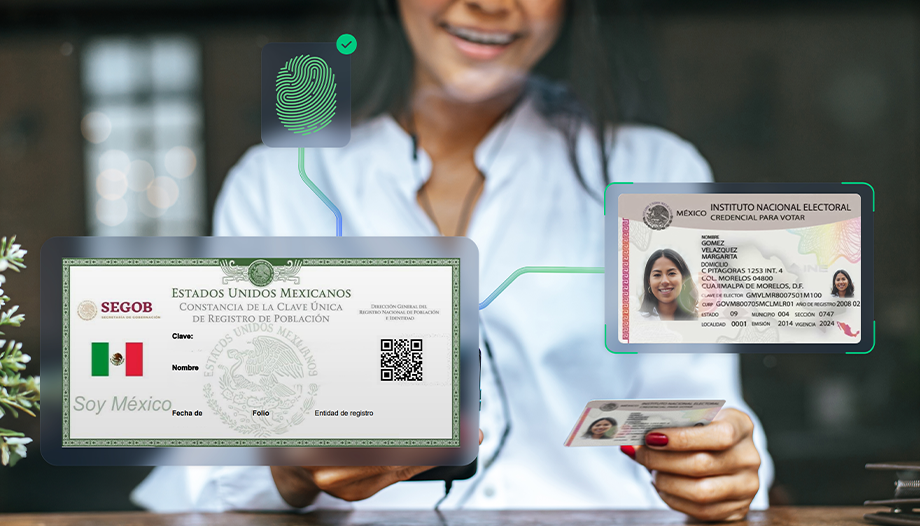
Starting February 2026, Mexico will implement the Biometric CURP (Unique Population Registry Code) as a mandatory system, driven by the National Population Registry (RENAPO) as part of a reform to the National Population Registry and CURP Law. This change transforms the CURP from an administrative identifier into a biometric-based digital identity infrastructure.
The scope of this measure is nearly universal: over 126 million people currently hold a traditional CURP (alphanumeric code), and once the biometric CURP is fully implemented, nearly the entire population will require it for essential transactions related to banking, healthcare, education, social programs, and public services.
For banks, fintechs, insurers, and regulated entities, the mandatory implementation of the biometric CURP raises the level of scrutiny in identity verification processes. Organizations will need to align their onboarding, KYC, and authentication workflows with this new official standard. Failure to comply exposes institutions to regulatory observations, potential fines ranging from 10,000 to 20,000 UMAs (approximately €60,000 – €120,000), and reputational risks.
Key Elements of the Biometric CURP
The biometric CURP represents the evolution of the traditional CURP, designed to strengthen citizen identification through biometric technology that ensures unique, secure, and reliable records. Unlike the current model, which relies solely on an alphanumeric code, this new system integrates both physical and digital attributes for each individual.
The main components of the biometric CURP are:
- Fingerprints: Provide unique and irreplicable identity validation.
- Facial photograph and recognition: Enable visual and biometric verification.
- Electronic signature and, in some cases, iris scans: Enhance authentication for critical processes.
- QR code: Allows secure validation of records in both physical and digital formats.
The biometric CURP functions as a central node of the national digital identity system, unifying multiple identification systems into a single reliable source backed by the state. This enables more secure interoperability between public and private entities.
This approach aligns with a global trend toward trusted digital identities. Frameworks such as eIDAS in the European Union, along with regulated digital and biometric identity initiatives—such as the Civil Registry and Clave Única in Chile, biometric identification systems in Colombia, and the electronic DNI in Peru—reflect a clear movement toward unique, interoperable, and verifiable identities.
For banks, fintechs, insurers, and digital platforms, the biometric CURP represents both an operational and strategic shift: it allows for more robust identification processes, reduces the risk of fraud and duplicate identities, strengthens regulatory compliance, and lays the groundwork for more efficient and scalable identity verification across digital and physical channels.
How It Impacts Mexico’s Financial System
The mandatory implementation of the biometric CURP introduces a new level of security and reliability in identity verification across the financial system. For banks, fintechs, and regulated entities, this change enhances identity validation in an environment where fraud and identity theft are growing risks.
Organizations will need to adapt their onboarding, KYC, and authentication workflows to incorporate the biometric CURP as the primary identifier. This involves:
- Integrating biometric verification and document validation with RENAPO’s official records.
- Ensuring identity uniqueness and traceability for each verification process to comply with regulatory inspections.
- Updating systems and processes to operate under the new official standard, across both digital and physical channels.
Implementation will occur gradually: during the pilot phase, several institutions have already tested integration and verification in controlled environments. From February 2026, the biometric CURP will become mandatory and exit pilot mode; by that date, institutions must have updated systems, processes, and controls to verify identities under live operational conditions.
This change represents not only a regulatory requirement but also a strategic opportunity: to optimize processes, reduce fraud, and consolidate a reliable digital identity for clients and users within the financial ecosystem.
What the Biometric CURP Offers the Financial Sector
The biometric CURP provides banks and financial institutions with a safer and more reliable identity standard:
- Enhanced security: Biometrics reduce the likelihood of duplicate or false identities.
- Improved fraud prevention: Strengthens controls during account openings and sensitive transactions.
- Unique and verifiable identities: Facilitates identity confirmation across both physical and digital channels.
- Greater regulatory confidence: Aligns identification processes with an official state-backed standard.
More Controls to Prevent Fraud and Identity Theft
Implementing the biometric CURP establishes higher identity verification standards, allowing financial institutions and businesses to mitigate risks associated with fraud, identity theft, and money laundering. Centralized and secure biometric data enables more precise and reliable controls throughout all identification processes.
Key benefits and controls enabled by the biometric CURP include:
- INE authenticity verification through advanced document security detection.
- 1:1 facial matching against RENAPO records.
- Validation of CURP uniqueness to prevent duplicate registrations or multiple identities.
- Liveness detection using robust methodologies to mitigate impersonation attacks.
- Traceability and auditable evidence at every stage of the verification process for regulatory inspections.
- Updated onboarding processes, incorporating biometric CURP requirements before February 2026.
How Facephi Helps Institutions Comply with the Biometric CURP Requirement
The mandatory implementation of the biometric CURP is not just a regulatory requirement—it represents a critical challenge for the financial sector. Banks, fintechs, and insurers must adapt their onboarding, KYC, and authentication processes to comply with the new official standards. Failing to do so can lead to significant fines, regulatory observations, and reputational risk, while also leaving institutions exposed to fraud, identity duplication, and impersonation.
In this context, Facephi positions itself as an Intelligence Fraud platform, unifying Identity Verification, Fraud Prevention, and Compliance/AML support into a comprehensive value proposition for the financial sector.
Under the current identification standard in Mexico, Facephi supports institutions through advanced biometric technologies and its native integration with the INE system, which is currently a key reference for banking identity verification and is recognized by the CNBV. This integration strengthens identification processes across both digital and in-person channels, reducing the risk of impersonation and fraud from the very beginning of the customer relationship.
As an Intelligence Fraud platform, Facephi enables institutions to:
- Consolidate facial biometric verification as a cornerstone of trusted identity.
- Detect and mitigate fraud and impersonation attempts in critical processes.
- Generate traceability, evidence, and controls aligned with current regulatory requirements.
- Integrate identity, fraud, and compliance into a unified risk perspective.
Facephi remains aligned with regulatory developments related to the biometric CURP in Mexico, closely monitoring the evolution of the institutional framework and any future validation models that may be enabled. In the meantime, its expertise in biometrics, fraud prevention, and integration with official infrastructures positions the company as a strategic partner for institutions seeking to anticipate change, strengthen compliance, and move toward a robust digital identity—aligned with international best practices and the expectations of both regulators and customers.